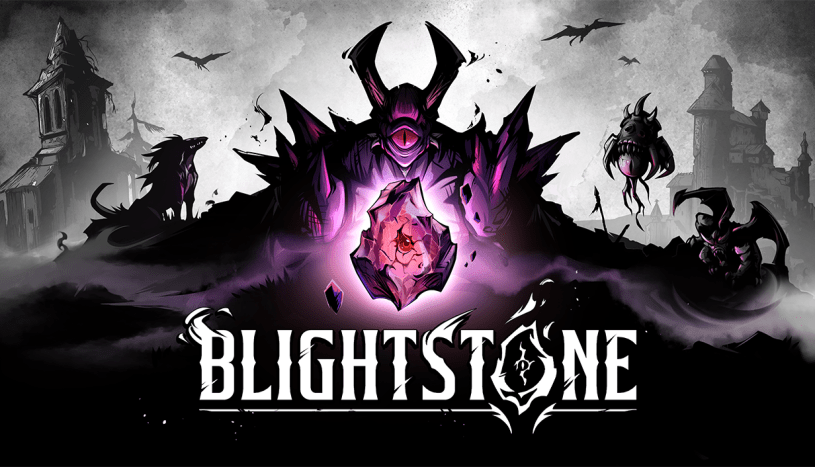
I think the genesis moment for me with Blightstone occurred when I used a telekinetic blast to chuck a crazed cannibal off of a cliff, which unceremoniously ended his life. It was then, howling with laughter, that I knew I’d found something worth writing about.
Developer(s): Unfinished Pixel
Publisher(s): Unfinished Pixel, Kepler Ghost
Release Date: January 20th, 2026
Released on: Windows
Reviewed on: PC (Win)
Copy Provided by Publisher
As always, I’d like to start with a brief primer on Blightstone. It’s a Turn-Based Strategy title that’s releasing into Steam Early Access where you’ll lead a squad of 3 heroes on a journey to destroy the titular Blightstone. Each hero has a handful of character defining abilities, as well as unlockable skills.
It’s also worth mentioning that Blightstone is structured as a Roguelike, which amounts to exactly what you’d expect from this sort of thing if you’ve played games like Into the Breach, Invisible Inc, or Shardpunk before. That is, the equipment you’ll find each run will be random, as will the abilities that you’re offered whenever your heroes level up. Combat encounters are also randomized, but they’re pulled from a pool of crafted encounters (with a few minor variations) to keep combat from feeling over, or undertuned.
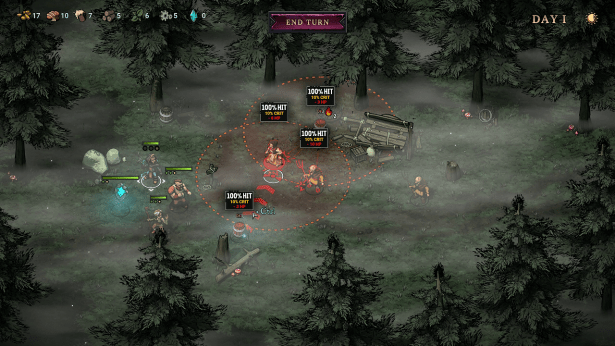
However, there is a bit of a twist from those aforementioned comparison points: Blightstone has arrested itself away from using a grid. That might not sound like a huge difference, but it does lead to slightly different planning, and execution in terms of combat when compared against Blightstone’s grid-based contemporaries.
The other big change is that Blightstone features a handful of, for lack of a better word, systemic interactions. What I mean is that if someone is wet, they’ll take more damage from electric attacks, but less from fire ones. When someone is thrown off a cliff, as I noted in the introduction, they die with a swiftness unless they can fly. Again, it might seem small, but having to factor these sorts of interactions into your overarching planning does help to differentiate Blightstone by giving it a unique edge.
And if I’m being perfectly honest, it’s these few unique facets of Blightstone that really drew me into playing it. That’s exactly the reason why I started the review off by sharing the story of how I discovered that gravity exists in Blightstone. That was such cool interaction to discover, and it was something that I repeatedly made use of throughout my playtime. Granted, not every encounter affords you the opportunity to yeet, but it was always a joy to send someone into the abyss.
I think it’s also worth mentioning that each of the game’s 5 heroes feels fairly well-defined. They have a selection of abilities (or spells) that feel appropriate for the particular archetype they’re slotted into. For example, the Druid can summon thrown walls, and summon animal companions, while the Brawler has the ability to grapple foes, and throw objects with intense force. This makes finding new synergies between each hero’s wildly different abilities an absolute joy.
Though, I believe Blightstone could use a little more variety as it relates to its heroes. I say this because my runs started feeling a little too similar after only a dozen hours of playtime. That said, there’re 2 planned heroes scheduled to release in the next few months (Feb & Apr), which will increase the number of unique party configurations from 10 to 35. As such, I expect that my misgivings with the game’s variety will work itself out as the team at Unfinished Pixel continues working on Blightstone.
Having said that, there are a few other things that hampered my enjoyment of Blightstone, which aren’t part of the team’s content release plans. Before I get into that though, I’d like to remind everyone reading that Blightstone is releasing into Early Access, which I think affords it a little bit more leniency than I’d give other titles. Plus, I believe, all of the things I’m about to point out are solvable rather than being highly ingrained features that’ll be a huge pain to rework.
Firstly, the blight system feels poorly considered. As a quick primer, your heroes have a secondary health bar that accumulates blight throughout your adventures. It acts akin to the sanity mechanic from Darkest Dungeon, and sees characters accrue (mostly) negative side-effects as blight builds up.
However, where this system differs from its inspiration is that there’s no meaningful way for the player to interact with blight. Just as a quick example, pushing your heroes to explore deeper, and longer in Darkest Dungeon would increase the sanity damage they received. As such, there was a decision for the player to make: do you take the additional sanity penalty in exchange for more loot, or bail early and maintain the mental well-being of your heroes?
That kind of decision making straight up doesn’t exist in Blightstone. You passively accumulate 10% of your total blight every in-game day, and the only way to counteract this build-up is to sacrifice most of your camping actions every evening. Though, I’d argue, the other camp skills aren’t as valuable as negating the downsides of blight, so you’re not really losing anything when you do this.
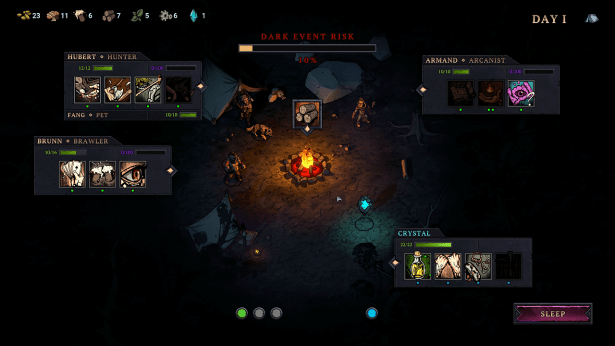
Plus, if you don’t bring the right party members then you have no way to interact with this mechanic at all.
I dunno. Blight just feels totally vestigial in its current implementation. Ideally, I’d like to see it prompting the same kinds of decision making as Darkest Dungeon where players are weighing the opportunity cost, and potential benefits of riskier decisions. Instead, it felt like a hunger meter from a Survival game where all you needed to do was periodically check-in to stave off the majority of the negative side-effects.
I also don’t like Blightstone’s progression systems. There’s both a skill tree, and a generic unlock X power for Y currency type thing, but both suffer from the same problem: the upgrades don’t feel good.
To explain exactly why I feel that way, let’s dive into an example:
Blightstone uses the same node-based map that Slay the Spire popularized. This features a variety of nodes that represent different events that the player can stumble into along their journey such as combat, shops, or story-related encounters. However, Blightstone’s maps are almost nothing but combat encounters, which would seem to defeat the purpose of using this kind of system.
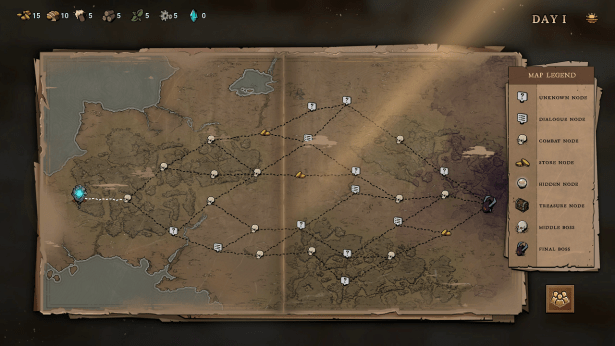
Editor’s notes: I didn’t have a screenshot from before I upgraded to show what I meant.
Except that’s not entirely true because one of the upgrades that you can purchase between runs will increase the number of nodes that appear on the map. The practical effects of this upgrade meant that I went from generating maps with a single shop to maps where there were several shops to visit along my journey. Ergo, I actually had a decision to make about where I went as different paths had practical differences I could exploit instead of every path having nothing but back-to-back combat.
In no uncertain terms, this feels bad. It’s like the version of the game that I’m playing was intentionally made worse, so that I’d have something extra to unlock. And this isn’t the only example of an upgrade like this with increased healing, reduced store prices, increased blight resistance, additional reward choices, and additional movement all being locked behind upgrades. Ultimately, this meant that I had far more fun with Blightstone during the latter-half of my playtime, since I’d removed several of the barriers to fun that were put in-place from the start of my playtime.
That said, both of these pain points are very fixable problems. Adding some more ways for players to interact with blight won’t fundamentally change the core structure of Blightstone, nor would altering what’s offered as unlocks within the game’s progression system. In fact, I’d argue this is exactly the kind of feedback that developers should be looking for while leveraging a community driven development approach. Though, it’ll be entirely up to Unfinished Pixel to decide how, or if they’re going to respond to it. These are just the opinions of a single player after all.
So, where does that leave me with Blightstone?
Despite focusing more on my misgivings with the game, I did actually enjoy playing Blightstone. Admittedly, I liked it a lot more once I’d nabbed upgrades to a few of the pain points that I was experiencing. However, I don’t want that to overshadow Blightstone’s solid foundation because it’s just as fun as any of its tactics-driven, Roguelike contemporaries. The 6 month road-map that the team shared as part of the reviewer guide also puts me in mind that Unfinished Pixel has a lot of ideas for how they want to continue building on this foundation, so I could see myself returning to play even more of Blightstone after a future update.
Ultimately, if you’re into the same kind of Strategy titles as I am then you’ll probably have a good time with Blightstone. I don’t know that you need to grab it immediately, but it’s something to put on your radar because Blightstone hits all of the right beats.
Did you enjoy what you read? Consider supporting my work by buying me a coffee over on Ko-fi.
 Frostilyte Writes