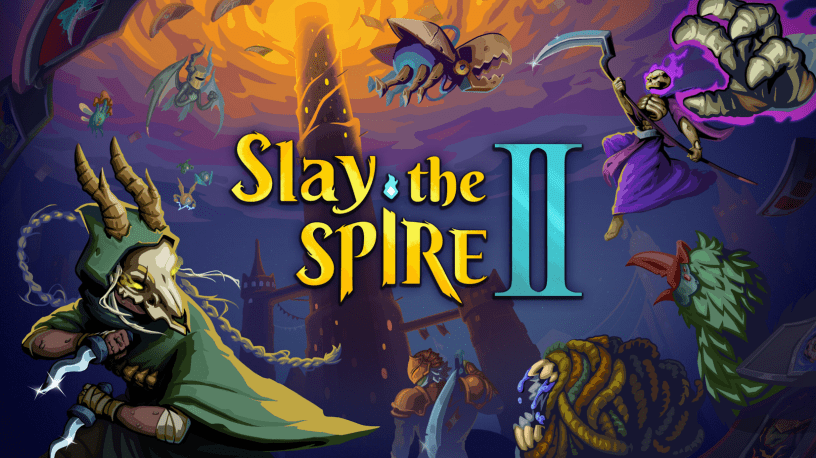
Against my better judgement, I decided to pick up Slay the Spire 2. The Early Access trailer had left me feeling decidedly whelmed since I wasn’t really interested in playing the game in co-op, which appears to be the key new feature of the sequel. Despite this, I ended up buying the game because I was insatiably curious given the overwhelming amount of positive buzz that’s currently circulating about it.
As you might’ve surmised, I’m fairly lukewarm overall on the sequel. A big part of that stems from how Slay the Spire 2 doesn’t do much to actually move the needle forward. The new artwork is nice, as is the rebalancing of a subset of cards from the first game. However, it’s hard to shake the feeling that I’ve already played this game before given how much it has in common with its predecessor. In fact, a lot of my feelings were echoed by Robin Valentine in an excellent article over on PC Gamer.
However, whether or not a sequel is too similar to its predecessor isn’t actually what I wanted to write about.
Instead, I wanted to rant about how Mega Crit didn’t use the sequel as an opportunity to address what I believe was Slay the Spire’s biggest shortcoming. As such, let’s dive into why I think Act 1 still feels extremely repetitive, and isn’t very fun to play.
As a bit of a precursor for the 5 of you that haven’t played the original: Slay the Spire is a Roguelike Deckbuilder that takes place over 3 Acts. Each of the Acts pits the player against a bevy of different combat encounters, and rewards them with random cards that they can add to their deck. The ultimate goal is to create a deck that can overcome all of the game’s challenges before you start another run, and do it all again.
Unfortunately, starting again will require you to trudge through Act 1, which has always been my least favourite part of the game. Though, to get into exactly why that is, we first need to look at the conditions that we start each run under.
Every character has a defined starting deck, and you will be forced to use it from the onset of your journey. Said deck is 10 cards (12 for one of the characters), and is built around largely the same structure. They contain 4 to 5 Strikes, 4 to 5 Defends, and 1 or 2 class specific cards. Regardless of which character you’re playing, all of the Strike and Defend cards are functionally identical, though they have unique artwork.
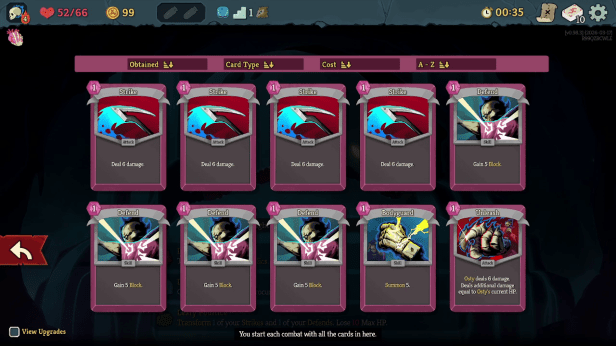
This means that all 5 of the game’s classes start from a very similar position, and feel remarkably similar to play until you begin drafting new cards. Sure, there are unique quirks to all of them thanks to their character specific cards, but 80% of your starting deck is identical every single run irrespective of which character you’re playing. This only changes over a protracted period as you draft new character specific cards one at a time by winning in combat encounters, or visiting shops. The result is an opening Act that feels highly repetitive as you slowly get your deck rolling with a unique cadence, and strategy.
While it could be argued that this is an inherent shortcoming of all Deckbuilders, I’d like to highlight 3 examples of recent games that sidestep the problem entirely. The games in question are Wildfrost, Monster Train 2, and StarVaders. Each does something a little different to ensure that players have a little more variety when they queue up for a new run.
Firstly, there’s Wildfrost wherein all 3 of the game’s playable factions have completely different starter decks. None of the cards overlap, and each features a couple cards that contain some unique keyword that is locked to the faction that you’re playing. This makes each of the 3 feel distinct, and it quickly introduces new players to some of the mechanics they’ll be using throughout their run.
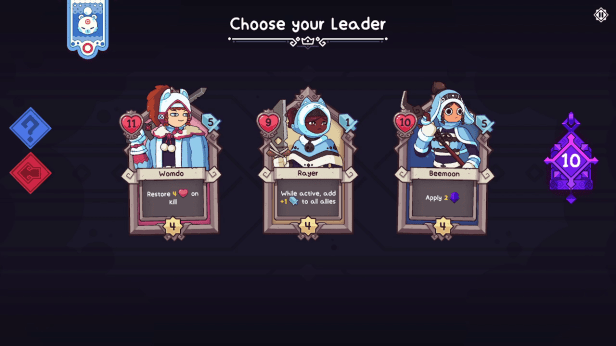
Plus, the abilities of your team leader are randomized each run, so you’ll always have something unique to play with, and build around during each playthrough of Wildfrost.
Monster Train 2 does something similar to Wildfrost in that each faction has unique cards in their starter deck. However, the cards that populate said starter deck are altered based on which of the 2 clans you choose to play as. Both your primary clan, and secondary clan will add 5 copies of their unique starting cards to your deck. This means that there are 10 different starting combinations, 1 for each of the secondary clans, whenever you queue up for a new run.
Though, that’s a bit of a misnomer because there’s actually 40 unique starting loadouts since all 11 factions (12 with DLC) have 2 options for their starting cards. This gives players a plethora of available options for tweaking their deck before they’ve even begun their run.
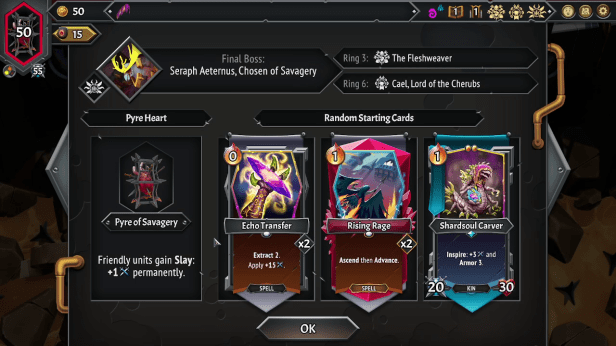
And all of this is without mentioning how every run of Monster Train 2 gives players 5 additional random cards to start with. This all but ensures that you’re rolling with a completely unique deck, filled with faction specific keywords, from the onset of each run.
Finally, there’s StarVaders wherein the 3 available classes have completely different starting decks just like Wildfrost. Though, each of these decks is augmented further by your pilot selection. For example, the Stinger always starts with 11 cards, but more than half of them are swapped around depending on which of the 4 available pilots you choose to play as.
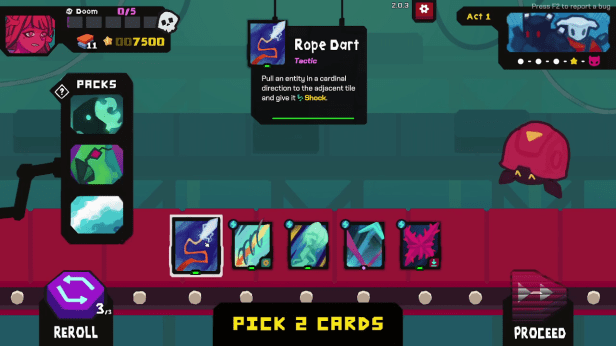
It’s also worth noting that this variety is augmented further with a forced draft before the first combat encounter, not unlike Monster Train 2’s 5 randomly gifted cards. However, in StarVaders you’re able to choose which of the 2 cards you take from the available pool of 5.
In all 3 games, steps have been taken to increase the variety that the player is offered right out of the gate. In my experience, this makes starting a new run a lot more interesting since I’ll actually be given a completely unique starter deck. This is a stark contrast to Slay the Spire 2 where I’ll be looking at the same 8 to 10 cards every single run.
This also makes the early game encounters a lot more interesting to fight. I won’t have exactly the same cards available every run, so I actually have to think my way through the earlier encounters. They’re still easy, but you aren’t playing the same handful of cards in the same order like you do during the first handful of combat encounters in Slay the Spire 2.
Though, in fairness, there is a random chance for players to alter their deck before they start Act 1 in Slay the Spire 2. One of the potential boons that you’re offered by Neow at the start of each run gives players a standard card draft, and another transforms 2 of their starting cards. These are inline with some of the examples I’ve highlighted, but they don’t feel as impactful given how homogeneous your starting deck always is.
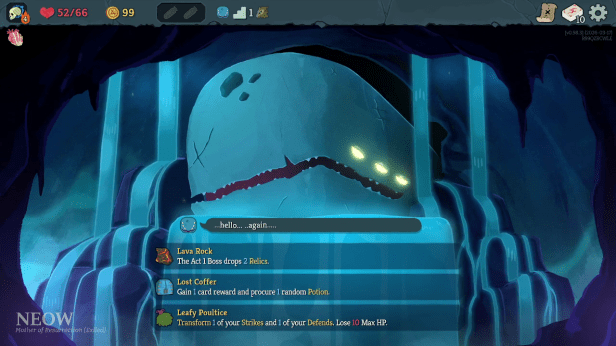
Plus, these bonuses are random, so you won’t necessarily see them every single run. That somewhat diminishes their ability to meaningfully address the problem at hand.
All said, it’s a little disappointing to return to Slay the Spire by way of its sequel only to find that little has been done to alter the game’s repetitive start. At best, a token effort has been made, some of the time, and it’s treated like a game warping boon. As such, you’re typically stuck with the same handful of cards to slog through the first several encounters whenever you queue up for another run of Slay the Spire 2.
However, as we’ve seen in the highlighted examples, this slow, repetitive start isn’t inherent to the Deckbuilding genre. Providing players with unique starter decks, random gifted cards, or card drafts before they begin their run can go a long way in making the early-game feel more varied, and interesting to play through.
On that note, I wish Slay the Spire 2 had borrowed some of this design from its contemporaries, but that isn’t what we got. Instead, the sequel is more Slay the Spire. Both the good, and the bad. That could change over the game’s stint in Early Access, but I have a feeling it won’t. It’s a very safe sequel that doesn’t appear like it wants to rock the boat, but I suppose we’ll see how the game looks when it releases fully.
Did you enjoy what you read? Consider supporting my work by buying me a coffee over on Ko-fi.
 Frostilyte Writes