
You want to know how to identify when you’ve been doing this for too long? It’s when you become a necromancer, and bring a series back from the dead.
Back in 2020, I started a monthly feature aptly called Month in Review. In it I’d discuss what games I’d been playing, share some quick thoughts about them, and also pull the curtain back on how things were going for me outside of blogging. It’s a fairly common post format for a lot of blogs, and it also helped me hit a posting target of once a week.
However, in 2022 I decided to drop doing Month in Review. At the time, I stated that the reason for this was that I was no longer keeping myself to a rigid once a week posting schedule. Month in Review was very easy to write since I didn’t have to put a lot of thought into it. I’d simply sit down, and write about whatever I’d been playing, while sharing some anecdotes. There wasn’t any requirement to go in-depth, or explain my viewpoint on some more meaningful level. It was just a monthly check-in.
While I don’t intend to return to a more frequent posting schedule, I do intend to bring Month in Review back. Though, I’m planning to do it with a limited scope. I’ll just be focusing on what I’ve played. That’s so I have an outlet for short-form thoughts about what I’ve been playing. I know I shouldn’t feel this way, but I normally can’t muster the oomph for writing about games when I have less to say. I think that’s because I spend so long editing everything I write, while agonizing over my word choice. That turns what should be a quick, and easy article into a protracted, and largely painful experience.
Anyway, enough rambling. I promise next month that my introduction for Month in Review will be shorter.
Granblue Fantasy: Relink
I started out the month playing Granblue Fantasy: Relink. It’s one of a few titles I picked up during the Steam Summer Sale, and I’m glad that I did because I don’t have a very strong impression of the game. Don’t misinterpret that to mean that I think Granblue is bad. I don’t really think anything about it because I’d forgotten I’d even played through it until I was looking at the list of games I played last month. To me, that says everything you need to know about it.
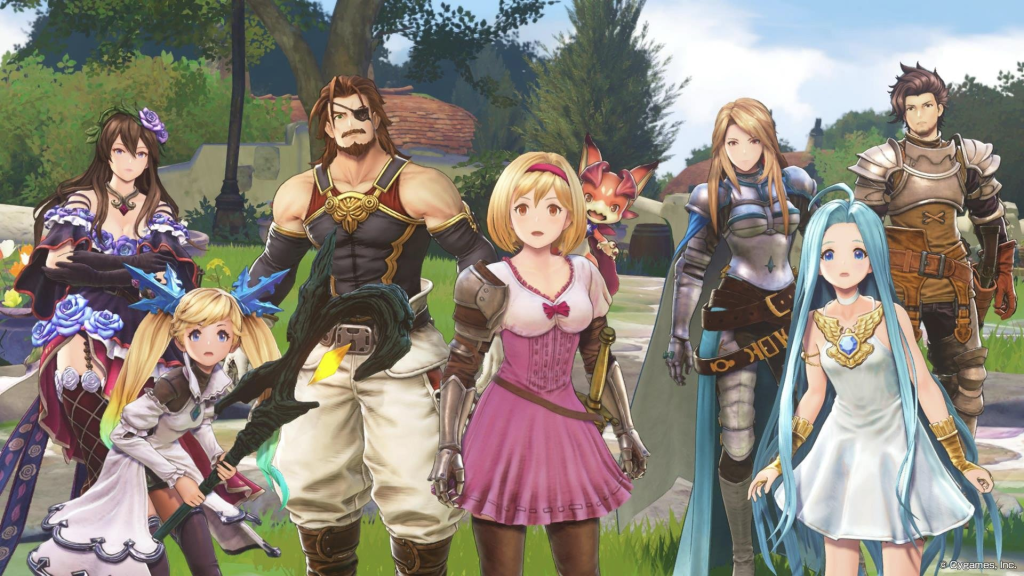
However, Granblue is a very pretty game. The characters are all gorgeous, and animated with a level of detail that I normally only see in fighting games. That makes sense when you consider Granblue’s roots as a Gacha game. A big part of those games is having a wide roster of appealing characters. It was nice to see that translated into Relink even if it can’t make oodles of money from in-game spending like the mobile game does.
Rain World
I had a very similar experience to a lot of people when I first played Rain World: I booted it up, played for about 30 minutes, and completely bounced off the title. It’s a game that’s purpose built around being a friction filled experience. That makes getting into Rain World fairly challenging, regardless of how many people rant, and rave about how amazing it is once you do.
One of those people is my significant other, who is responsible for buying my copy of the game. She enjoyed it a lot, and wanted to share it with me. This is why I decided to return to Rain World almost 2 years after I initially bounced off of it. I wanted to give it a fair shot for Mir. I wanted to at least try to see what she saw in the game.

After having completed the game twice, I can safely say that I now understand why people like Rain World. There have been several attempts to make video game worlds that feel like living, breathing places. However, almost all of these experiences exist as curated theme parks for the player. This isn’t a bad thing as it, usually, means that the game in question is engaging, and fun to play. However, Rain World actually delivers on that idea of a world that feels as though it exists beyond the player.
Having said that, I wouldn’t recommend actually playing Rain World. Part of how it achieves what it does is by eschewing all notion of game design from the past 30 years. This makes Rain World an intensely frustrating game to play, and there are huge swaths of my playtime where I was completely miserable. Don’t get me wrong – Rain World is a neat game. I just hate playing it with the deep, fiery passion of a thousand suns.
Wildfrost
I mentioned it in passing during my recent article talking about Early Access titles, but I returned to play more of Wildfrost. I did so when the 1.2 update dropped back in June, and was blown away by how much the game had changed since I last played it. The difficulty had been completely reworked so that it’s easier for new players to win, while offering an increased array of difficulty modifiers for veteran players looking to push themselves. Several cards were also reworked to flatten the power difference between some of Wildfrost’s best, and worst cards. All of these changes are great, and I had a lot of fun using that suite of new difficulty mods.
However, it became apparent to me that my article discussing gameplay tips for Wildfrost was completely out-of-date. So I ended up playing a lot more Wildfrost than I’d intended, so I could accurately revise my article to reflect the current state of the game.
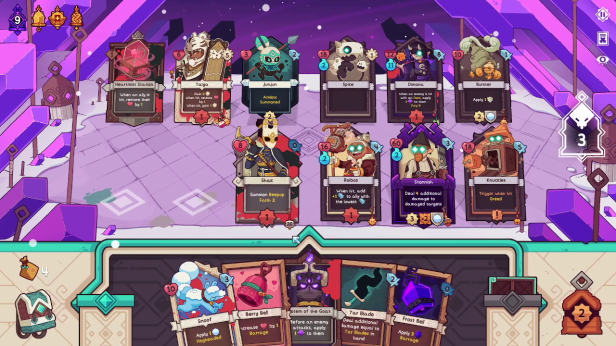
During this time, I started playing the Daily Voyage, which is the name of Wildfrost’s daily mode. This provides all players with the same seeded run of the game, and scores them based on how well they play it. I’ve continued playing this mode since I finished updating my gameplay tips article, and have been having a lot of fun with it. I don’t always complete the Daily Voyage, but I like how it gives me an environment to really test my game knowledge. I also managed to get a top 100 score one of the days, which I am very proud of.
Street Fighter 6
I feel like this is a given because I’m always playing fighting games, so I’m not sure how often I’ll actually mention Street Fighter 6 going forward.
That said, I spent the majority of the month playing Marisa, and have had quite a bit of fun with her. My rank online has stabilized at Diamond 2 – 3, which is a little disappointing, but also fair.
Oddly, there are still a lot of players in low Diamond that rely heavily on knowledge checking their opponent in order to win. As Manon, I had over a year of experience learning how to counter all of the common knowledge traps that players would overuse, so I found these players super easy to beat. I don’t have that same level of experience with Marisa though, so I’m still losing quite a few matches as I search for solutions. That’s a little frustrating, but there aren’t any shortcuts for developing match-up experience. I’ve just got to keep putting in the time, which isn’t a bad thing as I’m still having a lot of fun playing Marisa both online, and offline.

Speaking of offline play, I’ve been pleasantly surprised with how well I’ve been playing Marisa at my local scene. I suspected it’d take me longer to get this comfortable with her, but it’s been a refreshing experience to be as capable as I am with Marisa with how little time I’ve invested.
Steamworld Heist II
Finally, we’ve reached the last game I played this month: Steamworld Heist II (henceforth Heist 2). I really enjoyed the original Steamworld Heist, so I was fully onboard when I saw that a sequel was going to drop at the beginning of August.
The biggest change from the original is that there is now a class system in Heist 2. What’s neat is that the game encourages players to build using skills from across several different classes to make highly customized characters. I’m a sucker for this kind of thing as evidenced by my 4 separate playthroughs of Fire Emblem Fates: Conquest earlier this year. It’s just really fun to envision a build, then execute it, and see how it actually performs. Heist 2 is almost entirely carried on the back of that meta-level decision making reinforcing the incredibly strong, and simple gameplay loop of the original title.

That said, I do think the game runs a little too long. The majority of the game’s missions feature some kind of unique twist that players need to plan around, and I think that’s great. Those levels were always a joy to play, especially when some unique quirk of my character’s builds would help me to secure a decisive win. However, there are also missions that could charitably be described as filler strewn throughout Heist 2, and I think the game would’ve been a much better experience were most of those filler missions removed.
Don’t get it twisted: Steamworld Heist II is a great game despite the pacing issues. If you’re also a build craft sicko, or you’ve been jonesing for a new tactics game then I think this is one that you should consider.
Alright – that’s it from me. Thanks for reading if you made it this far, and I’ll see you next month and/or whenever my next article drops.
 Frostilyte Writes
Granblue Relink was an interesting one. I played it really hard. For one month. It is a really well put together game — and should it get an expansion, I’d be there for it.
And just looking at SteamCharts for it, I think might not be alone in that point of view. It’s really well rated (almost 90% positive), but also has seen massive player drop-off, with a 24hr peak of ~1.5k players now.
Most of my enjoyment came post campaign though in the multiplayer aspects, at a glance at your time and achieves, I would hazard a guess you finished more or less with the campaign, which then makes a lot of sense to me about it being quite a forgettable entry. I remember the highlights of the campaign I guess, but little else!
Steamworld series is one I’ve liked from afar for quite a while now, perhaps Heist 2 might be an OK place to enter, pacing issues you’ve mentioned aside, you might still have grabbed me with the mention of introduced classes and build craft enabled. xD
LikeLiked by 1 person
You’re not wrong in your guess as to where I stopped. I finished the campaign, took one look at what the endgame was by way of some Googling, and never opened the game again.
I’ve spent 20 minutes trying to figure out how to write this in a way that won’t offend anyone reading the comments (or you because I’d like to maintain our cordial relationship), but I just couldn’t get down with Relink’s progression system. It’s that really popular thing where the game slowly drip feeds the player tiny damage increases over a very protracted playtime, which always feels like a massive waste of time to me. I just can’t muster the motivation when I know the game is taking me for a ride by holding out a carrot on a stick.
Fwiw, I feel similarly about Mon Hun’s endgame in both Iceborne and Sunbreak. In both instances, Capcom wanted the player to keep running in place on a treadmill to see a marginal power increase. I found that antithetical to the rest of the gameplay experience where your largest power spikes are almost entirely related to smart armor builds, or knowledge and execution of a fight. And were it not for the hugely inflated health of a select few endgame monsters, there’d be literally no reason to even engage with these kinds of systems.
Though I’m sure that’s probably not terribly surprising from the guy who is often motivated by his own goals, and doesn’t find games with a heavy emphasis on extrinsic motivation to be very compelling.
RE: Steamworld – it’s kind of neat because the devs have never tied themselves down to a single concept, or genre. That means the games have a shared universe, and history but you get wildly different gameplay styles, ideas, and genres from each release. I’ve played almost all of them skipping the original DSi TD game (didn’t have the hardware), and the more recent city builder (didn’t enjoy the demo).
That’s all a really long way of saying that you could jump in at any time. There’s a lot of good stuff there to play depending on what you’re up for.
I think Heist 2 is really good for build craft stuff. I like the focus on actually finding and pairing synergistic abilities over it being a case of stacking a bunch of gear that all does the same type of damage so you do more of it.
Ex. There is a brawler skill called shifty, which lets your character move for half their movement after scoring a kill. If you combine that with the flanker’s passive movement increases, and the brawler skill that lets you use your sidearm as a free action then you can very easily score 2 kills in a turn from wildly different places in a level. This can make getting across a level to secure objectives way faster, which will let you clean up, and leave the level well before reinforcements start to flood in and overwhelm you.
There’s a ton of that sort of stuff in Heist 2. In my first pass I identified a handful of different pairings, and stuck to them, but the more I’ve been thinking about it the more ideas I have for other synergies that I want to experiment with. There might be a second playthrough on the horizons for me haha.
LikeLiked by 1 person
Haha, difference on opinion over game isn’t going to cause issues here, nonetheless, efforts appreciated. 😉
What I liked about Granblue’s progression system is that it seemed to cater for a range of playstyle preferences. If you wanted nothing more than the relatively easy (even on ‘Hard’) campaign experience, no problem.
And no need to worry about Sigils (aka MonHun Decorations), optimal build, or hell- even optimal play. You could largely button mash your way through that if you wanted to, and no problem.
Even beyond this point though, reaching the next notable steps in power (i.e., successfully getting through Manic/Proud difficulties, imo) you do have to start worrying about these things — but only to a point, and that point is not difficult (or more to your point, time consuming) to achieve.
Power comes in a lot of different directions, from pure levelling for a while, to weapon upgrades, to the Sigils, to buildcraft of mixing these, the… err… I forget their name, but the Crystal thingies, then the +weapon thingos you can add after you’ve level capped it… which… I also now forget the name of.
But the point being, you can quickly reach the level of power needed for this.
Then, if you want — but only if you want — there is a REALLY long tail of progression available for if you want to go nuts and S-rank everything the game has to offer.
I gave the game… *checks* … 66 hours total, and in that time would say that for all intents and purposes I ‘mastered’ one character (Narmaya) in both optimal play and build, and got some others close in build but I wouldn’t say anywhere close in play. xD
That sort of times puts it roughly on par with my experience of a MH game (or expac), although perhaps with Rise being a bit of an outlier there where I did give it >100 hours even in just the base game to get through to Valstrax before calling it a day.
But I think your comparison of the two systems is very valid, and to some extent, that was part of the draw for me — although even now I do find it a little weird, given how opposed to the idea of the MonHun grind I was before giving World a try for myself. Hah.
OH!
One final thought on Granblue and potential difference in our experience here, and difference between it and MH as well, which MIGHT be factoring here…
MH, and Granblue (but only if playing MP) — you only have to worry, really, about the gearing of one character. And the timeframe on that, imo, is ‘reasonable’.
But if you want to push into that end game of MH without MP, you need to get that power increase done across a set of at least 4 characters, and having to shift from a narrow focus to one that wide *definitely* makes the whole thing drag out.
To such an extent that I would probably agree with you that it was unreasonable. And now with the player base being what it is, and, I would assume, MP not really being as much of an option even for those that want it (short of bringing your own party), probably should get a shake-up on resource rewards if one hasn’t happened.
…given basically written a post in comments in response to your post in comments, I’ll probably hold off on responding re: Steamworld, other than to say appreciate the additional insight. 🙂
LikeLiked by 1 person
That all just sounds like the kind of treadmill you find in Diablo, WoW, or some Gacha games. And to your point – I think if either of us wanted to elaborate more on it then we might be better suited to doing full blog posts hahaha
Also, you’re not wrong about the tedium being amplified greatly while playing solo. I spent more time looking at loading screens for side missions than I spent playing them just to get the extra resources I needed to keep the rest of the party somewhat on par with Djeeta. That, admittedly, wasn’t my favourite thing in the world. That’s why I had no interest in pursuing the endgame at all – I didn’t want to continue grinding through very samey missions over and over, scoring S ranks every single time just to have to do it another 4 – 5 times before I’d be ready to do the next.
LikeLiked by 1 person
I’ve briefly watched a few people playing Rain World. Looks very impressive for the reasons you brought up, but I think I’d also hate playing this game. Looks easy to get deep into if you like it, though, yeah.
Good to see this feature back! I’d like to bring back the regular end-of-month posts too, even though my free time seems to be drying up.
LikeLiked by 1 person
I hadn’t really thought about it because I rarely jump to “just watch the game” as a solution to experience something, but yeah…Rain World is the kind of thing that I think a lot of people could best experience by watching someone else play it. That’d certainly save them from the mountain of frustration that the game be if you aren’t the extremely specific type of person the game was made for.
Well I’m glad at least 1 person is happy to see this return. I do end up finding these posts a lot easier to write than most of the stuff I do, but I think that has everything to do with how I go about writing. I’m a lot more lenient with Month in Review, so I can bang them out in like…a couple of hours as opposed to the several hours that other posts will inevitably take.
LikeLiked by 1 person