There’s a certain joy that’s born from playing the game of a first time developer. If it’s good – like really good – it can feel like you’re witnessing the beginning of something. It’s how I felt while playing Hollow Knight in 2017. It’s a game that I thought was special, but it took a little over a year, and several console releases, before the rest of the world came to agree with me. I’d also surmise that’s how the reviewers who picked out Stardew Valley felt, especially after it completely reshaped the Farming and Cozy game landscape following its meteoric success.
Though, there is another side to this coin. For every high profile success, there are dozens of other games that fail to make the same impact. It’s not for lack of trying – video games are too difficult of a craft for that to be the case. Rather, something just doesn’t quite click the way it needs to. As such, these games often act as a foundation for their developers to learn from while building their next release.
Unfortunately, Echoes From Ciudadela falls into that latter category. It’s a game that, I think, strikes out more often than not. Though, it is the first-time effort from a band of fresh faced developers, so I won’t be judging it with the same level of scrutiny as most of the other games that I’ve reviewed.
That said, I do have some pieces of feedback I’d like to provide, so that’s what the bulk of the review will look like.
Developer(s): Kronos Interactive
Publisher(s): Kronos Interactive
Release Date: July 23rd, 2026
Released on: Windows
Reviewed on: Windows
Copy Provided by Publisher
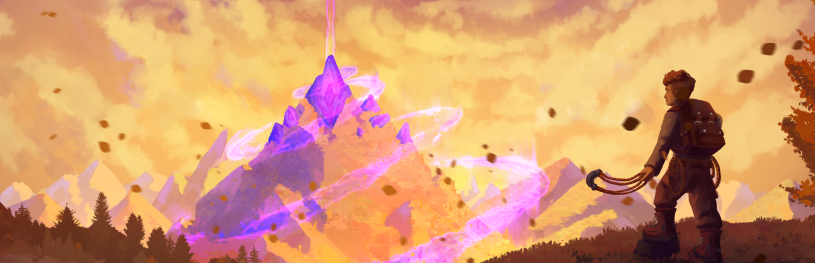
Before we delve into the nitty-gritty, let’s start by even answering what Echoes From Ciudadela is. In short, it’s a First-Person Puzzle Adventure. I’m inclined to say that it shares some of its DNA with those older Adventure games from back in the 90s – the likes of Myst, or 7th Guest – but I can’t say for certain because those games predate my knowledge bank. As such, any comparison I make would be superficial at best, but said comparison should allow you to picture Ciudadela in your mind’s eye.
Though, I think that the reason I’m most inclined to compare Ciudadela to Adventure games of yesteryear stems from how its puzzles are designed. I suppose that the easiest example to illustrate my point is one of the later puzzles in the game. Don’t worry – I won’t be spoiling how to solve it. Instead, I want to talk about how players are expected to interact with said puzzle.
Ok – so you’re stuck in a room with 2 different puzzles. What immediately springs to mind?
For me, I would think that I need to solve both of those puzzles so I can escape the room, and move onto the next set of puzzles. To ensure that others had a similar line of thinking, I asked a few different groups of friends who also play video games what they would’ve thought, and they all answered similarly. If a game locks you in a room with 2 puzzles, you solve the puzzles to unlock the room. Simple enough.
As such, we (I was playing the game alongside my wife) solved the first of the 2 puzzles, and moved onto the second. Unfortunately, the second puzzle didn’t appear to be working. We spent a solid 5 minutes trying to interact with it in different ways, but we weren’t able to get it to do anything.
My first instinct was to assume that we’d run into another bug. We ran into one earlier in the game, which forced us to reload our save from the last checkpoint because we weren’t able to interact with a particular puzzle element in the expected way. That’s fair enough, so we reloaded our save and tried the puzzles again. Except, this time we started with the puzzle that we hadn’t solved, and were able to solve it.
However, we weren’t in the clear as the puzzle that we originally solved first in our previous attempt was now no longer working.
At this point, I was ready to write off Ciudadela entirely. However, I decided to reference the video guide that was included with the game’s press kit to ensure that we weren’t doing something wrong. Perhaps the way that we were solving the puzzles was causing the game to break? I wasn’t sure, but I figured the guide might be able to illuminate why we kept getting locked out of solving both puzzles.
As it would turn out, we were the problem. You see, instead of solving both of the puzzles that are right there, you’re meant to wander off to the other side of the room, and interact with another object. This will re-enable whichever of the 2 puzzles you haven’t already completed, so that you’re able to complete it.
Oh. Okay.
You might be inclined to call this game reviewer stupidity, but I’d bet that if you let 10 random gamers playtest Ciudadela, all 10 of them would try to solve both puzzles back-to-back. You’ve given the player a goal – solve the 2 puzzles – and they’re able to interact with both of them. As such, when one of them stops working it doesn’t read like a call to investigate further into the room – it reads like the game bugging out. Hence, my confusion, which eventually turned me toward the included guide.
This same sort of moon logic is strewn throughout Echoes From Ciudadela, but this is easily the worst example of it. Normally, the voice acting, or your in-game journal outright tell the player what they’re meant to do, which helps to fill any gaps in logic that exist within the puzzles. Though, I’d argue that you aren’t really solving anything while being handed the solution this overtly. It just…doesn’t feel very puzzley when you never have that “ah ha” moment after working out the solution because you’re simply going through the motions for most of the game.
Having said that, I don’t think what’s on offer is completely unsalvageable. If we cycle back to the example that I highlighted above, simply allowing players the option to tackle both puzzles back-to-back while still allowing the current expected path would go a long way. This would ensure that players can solve the puzzles in whatever way makes sense to them instead of being arbitrarily cut-off halfway through solving things.
As such, I’m of the mind that Ciudadela needed some more playtesting by folks who weren’t on the game’s development team. Even if it was just friends, and family. A lot of the puzzles feel like they were designed in a vacuum, which is why they don’t make much sense without overt hand-holding. However, if you conduct some playtests, and iterate based on your observations from those tests then you’d potentially land on a much more sharply designed experience.
Before I close out, there were a couple other stray thoughts that I wanted to mention too.
Firstly, there’s no Field of View despite this being a first person game. I actually need that as an accessibility option because a narrow FoV gives me motion sickness. It would’ve been a nice inclusion, though I luckily had Mir around to drive through the bulk of the game since I couldn’t look at it for more than 5 minutes without feeling queasy.
Secondly, the game feel is both sticky and slippery. All of the action – interacting with anything, or using your Balearic sling – feels really stiff. It’s the kind of thing where you press a button, and then you’re seeing something happen on screen with a noticeable delay. That’s not the end of the world in less action-oriented titles, but it does make using the sling a little awkward.
As for the slippery: your character accelerates very quickly while moving instead of moving at a static speed. I’m not entirely certain why that’s the case, as I think it would’ve made more sense for movement to remain at a locked speed for the whole game. Regardless, it makes the main character a little cumbersome to control throughout your journey.
Finally, the keyboard is dramatically under-utilized as far as keybindings are concerned. The best example that I can point to is how you need to cycle through your different ammo types using 1 and 2, instead of hot swapping between the 4 with the 1, 2, 3, and 4 keys. It almost feels like the game was designed solely around using a controller, so all of the keyboard controls are beholden to the same limitations like the previously highlighted example. As such, the keyboard controls feel quite awkward, and don’t really align with what you might expect if you’ve played any other first-person games on PC.
Evidently, I didn’t really enjoy my time with Echoes From Ciudadela. The long, and the short of it is that I simply didn’t enjoy the game’s puzzles, which is fairly damning for a Puzzle game. I’m still of the belief that the bones are solid, but I think some more playtesting (specifically from people who weren’t on the game’s development team) was required to iron out a lot of the rough edges that exist within the game’s puzzle design. That, in combination with the fiddly controls, and lack of accessibility options really soured me on the whole experience.
However, as I said at the top of the review, I think this will likely act as a springboard for Kronos Interactive’s next game. I’d bet there were several lessons learned over development, and they likely have a framework to build from while designing their next game. Hopefully, they can iterate on that, and deliver something even better with their next kick at the can.
Did you enjoy what you read? Consider supporting my work by buying me a coffee over on Ko-fi.

